Saturday, February 15, 2025

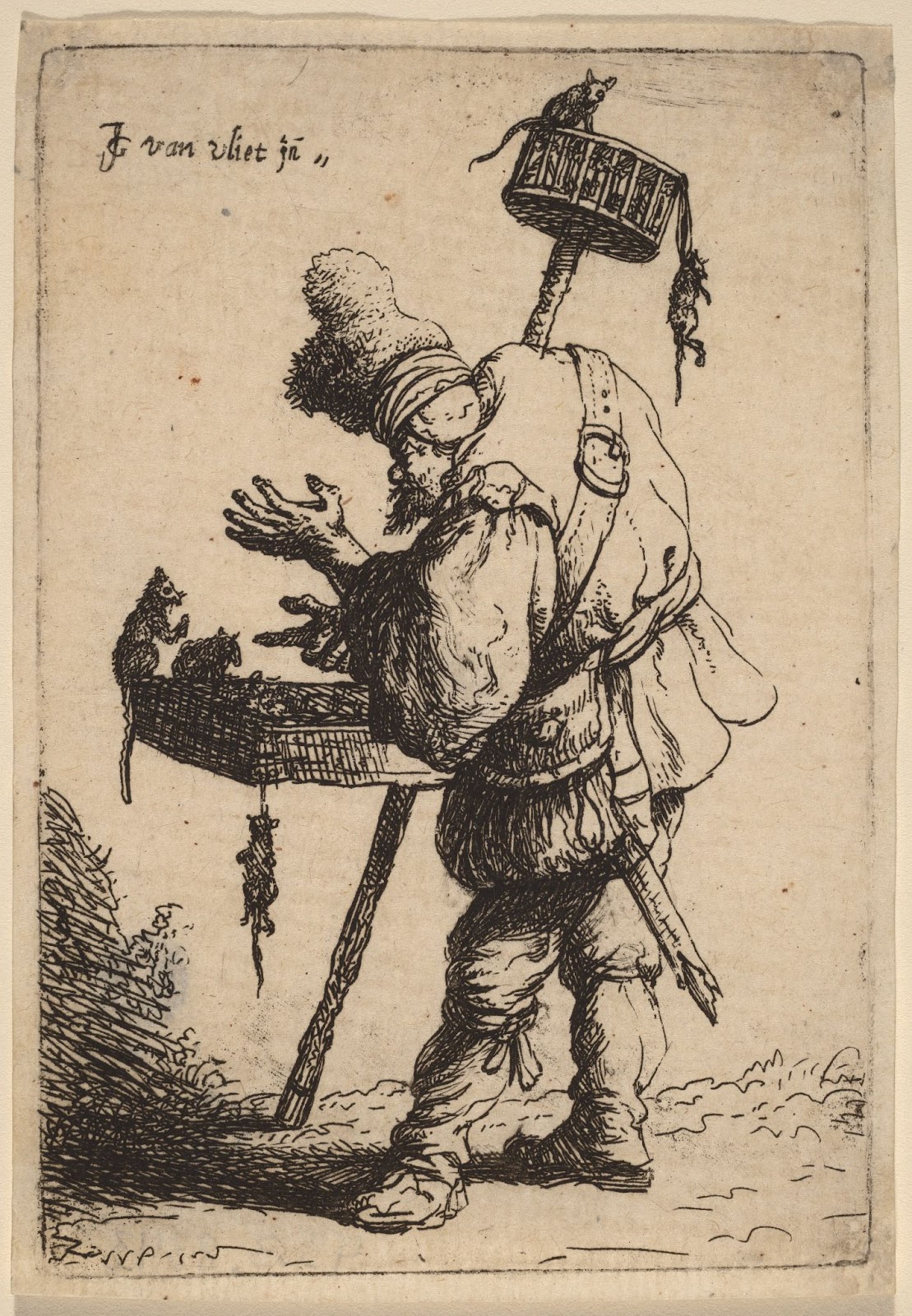
Rat master remastered: Glog class: Rat master

Rat master remastered:
A: Rat friend, call rat, rat gossip

B: Transfer affliction, rat mapping

C: Summon dire rat, thief skills

D: Rat apotheosis


Rat Friend

You can speak freely with all rodents.  All rodents and rodent like creatures recognize you as the beloved of the rat god, and will improve their starting attitude toward you by one step.  This protection doesn't extend to your friends.


Call Rat

You tap on a wall, sing a song, or emit a high-pitched squeak.  If there are rats nearby (and there are nearly always rats, unless you are underwater or on Antarctica or something) a rat who is loyal to the rat god will emerge from somewhere nearby and join you.  You can call one rat per turn.


Rats obey you because they are terrified to disobey the rat god, for reasons they struggle to explain.  They obey you unhesitatingly, although they will cry little rat tears and complain if you give them obviously suicidal orders.


The maximum number of rats that you can control and summon per day is equal to 10 times your level. 

If you order your rats to fight, use the Minion rules.  Each rat has HP 1, AC as unarmored, Movement 9(30ft). 


Sidebar: Minion/swarm Rules

When attacking swarms, you don't roll to see how much damage you do, you roll to see how many you kill.  Swarms attack in groups, and make a single attack roll for the whole group.  This single attack does 1dX damage, where X is the number of minions in the group.  AOE effects kill all minions in its area of effect with a failed save, or half of them on a successful one.


Rat Gossip

When gathering rumors, you gain 6x as many, as long as you spend at least 6 hours interviewing rats about what they've overheard.  You can only use this ability once per city.


Transfer Affliction

Once per day, you can transfer a disease, poison, or curse onto a willing rat.  


Summon Dire Rat

You can choose to summon a dire rat instead of a normal rat. Dire rats count as eight rats for the purposes of your Call Rat ability. And have stats as a dog or wolf.


Thief Skills

You have thief skills as if you were a level 2 thief.


Rat Apotheosis

Gain 2 MD you can use to cast darkness, misty step, silence and knock. 


Rat Mapping

You can send your rats into a dungeon to map it.  This takes 20 minutes per room explored (how many rooms the rats explore is detailed below), but is relatively low risk, since you can just sit outside the dungeon and interview the rats that come trickling back out.  Choose how many rats you want to send in, these rats still count as being controlled by you.


The end result of this process is a map of the dungeon.  Rooms are described primarily through smells (and remember that rats lack dark vision) as well as a general sense of "good place", "bad place", or "indifferent" based on whether the room contains anything of interest to a rat.  Rats enjoy food, water, safety, warmth, and an abundance of places to hide (such as furniture debris or dirty straw).  Rats don't enjoy fire, noise, large creatures moving around, people talking, or a complete lack of places.  Because rats are stupid, lazy, easily confused, and terrible at passing messages along.


So the map is just a list of circles with lines drawn between them, labelled with the predominant smell of that room (if any), with occasional smiley faces and sad faces, depending on whether the rats did or didn't like the room.


Rats find all obvious exits to a room.  They have a [rat]-in-6 chance of finding secret passages.  Even if they can't enter it, they can still detect it, and tell you about it.


To draw your rat map, get a d6 for every rat that enters the dungeon.  Assume that all the rats move into the first room and roll all the d6s.  So if you sent in 6 rats, roll 6d6 for the first room.


Every result of a 1 or 2 indicates a rat that has died, gotten bored, or wandered off. This is modified by the danger level of the room.


If you have at least two dice that show a '6', the rats have paid especially good attention to this room, and return with a more useful description of the room.  (More details than just smells and if they liked it--they actually return with a description closer to what a person would describe.  Remember that they are limited by their language.  A throne is described as a "fat human resting place", and a library is described as "a human paper granary".  They have names for all the common monsters.  You don't get to cross-examine the rat about the description--it's all just knowledge passed along by the rats.  This basically equates to an extra line of description for the room.


Then pick up all the remaining d6s, pick an unexplored path (from any room), and then go through it.  Repeat this process for the next room.


The original: https://goblinpunch.blogspot.com/2015/12/rat-master.html?m=1 


Art is public domain. 


Tuesday, February 11, 2025

For we hang ourselves upon the bough - Glog class: Mage

A: Mage, Synthesis, Warmind OR Closed eyes.

B: Spell eater, Counterspell, Ritual. 

C: Tuner.  

D: Arch mage. 

+

Δ: Envoy

Δ: Carrion Lord

Δ: Wyrm

Δ: Lich 


Starting equipment: A waterproof cloak and satchel with 100 sheets of paper, chalk, a pencil, 10 doses of powdered coffee and a saber.

Skill: Magic and: Physics and Mathematics, Anthropology and Witchcraft, Biology and Medicine, Religion and spirituality.  


Mage:

-You may gain an MD and random (1d8) spell from any list of your choice for each template, including delta templates. 

-You have a 3m/10ft diameter sphere of omniception. You may see spirits, magic and the internal structure of things. Seeing spirits can lead to them establishing a connection with you, for better or worse. This is a form of limited divination*.

-Choose a spell school (listed at the bottom of the post). This is your primary school. 

-You may gain spells from grimoires, magical or cursed items, and spell eater, though these are all zero-sum**. You may also gain spells from pacts with divine entities. 


Synthesis: Whenever you gain a spell not from your school from any source, gain one spell of your choice from your primary school.


Warmind:

Gain +[template] to hit, and you may perform maneuvers as a fighter. 

You may see HD, AC and MD. 

OR

Closed eyes: 

The first MD you use on any spell becomes a d4. 

You may turn off your mage sight. 


Spell eater: You may consume the spell casting organs (usually brain) of a spell caster or magical creature to steal 1 random spell (chosen by dm) from them. 


Counterspell/Ritual: If you have a conceptually linked/inverted spell, you may spend a reaction and your MD to increase/decrease the [dice] and [sum] of a spell effect within line of sight. These are rolled separately.  


Tuner: 1/day, change the result of an MD to any number. 


Arch mage:

-Invent a new spell for your school.*** This is the first step to creating a new school of magic.

You may invest large quantities of resource, as well as an artifact or learned truth outside the purview of common mage kind, to invent additional spells.

-Choose [level] non-capstone spells from any school. 

***Requires approval of every player and the dm. This will be added to lists of future pcs or NPCs from that school.  


Δ: Envoy: Enter in a personal agreement with a demon, spirit or other supernatural entity. 

1/day, you may change a MD to a die of any size from d2 to d12. 2/day, If your patron is an angel, major god****, or if you are possessed.


Δ: Carrion Lord: Implant an organ made from divine or truly mythical flesh into yourself. Such as from angels, demons, true dragons, and outsiders. 

You suffer a tenth of and gain a corresponding benefit from any curse or disease inflicted by something you willingly imbibed.  


Δ: Wyrm: Be far, far too deep underground. 

You may use your blood as lantern oil, 1HP per hour. The MD only lasts for the duration the condition is met, but you can keep the spell. 


Δ: Lich: The way is unknown, save for the first step. All demons know the path, but are reluctant to lead you there. Convince them. 

-Recover max hp damage at a rate of 1/hour. Your memory and ethics cannot be altered. You are immune to all forms of death, including true death. Though, this does not prevent damage in any way. 

-You may also store up to three souls within your body. Each one increases your max MD by 1, and can be used to create 2HD homunculi.

-Your body will adapt to any material implanted to it, maintaining structure and function as best it can. You could replace your brain and heart with adamantine, should you wish. 


*Divination post upcoming. Omniception also allows you to see through walls and inside objects. Divination post will include countermeasures.  

**Zero sum as in the amount of spells remains constant. Only gods and demons introduce new spells into circulation.

****Praying does not count as a personal relationship, to count, you must be able to reliably contact them, and to criticize them without fear, and to, if you ever needed, go see their physical form. 


You may use any glog mage, such as from this list: https://attnam.blogspot.com/2018/08/d50-glog-wizard-schools.html?m=1  


What is magic?: 

Magic is divided into two forces. 

First is true magic. This is divine essence which permeates the land, stemming from the blood of a god deep within the earth. All angels supply their own divine essence, granted to them by a their god at their creation. When they run out, after many kalpas, they fall and become demons. Hollow shells of angels which crave souls and the flesh of gods to regain their wholeness. Mages act as demons, and originally learned magic from them. They require an external source of magic. Magic is passively absorbed when at least a league outside a city or town at sunset every day. But must be bought when within a city. 


Second is resonance. This is conceptual resonance between concepts and reality. Things which are associated conceptually cause each other. To paraphrase, here is a quote from the golden bough, which I read a couple of days ago (The broad strokes of this magic system are 1.5 years old at this point).

“If we analyse the principles of thought on which magic is based, they will probably be found to resolve themselves into two: first, that like produces like, or that an effect resembles its cause; and, second, that things which have once been in contact with each other continue to act on each other at a distance after the physical contact has been severed.”

Therefore, resonance is the manifestation of conceptually linked phenomena causing each other.

Author notes: This class is quite powerful, but should in theory be relatively balanced with other mages, if only having a wider spell list. Lich is ridiculously powerful, but has been adjusted to be stronger based on feedback. It aught to be difficult to get.

Also, should I add explanations to the names at the beginning of the posts? This name is based upon the mix of the Golden bough and the hanging of Odin. Please comment bellow.


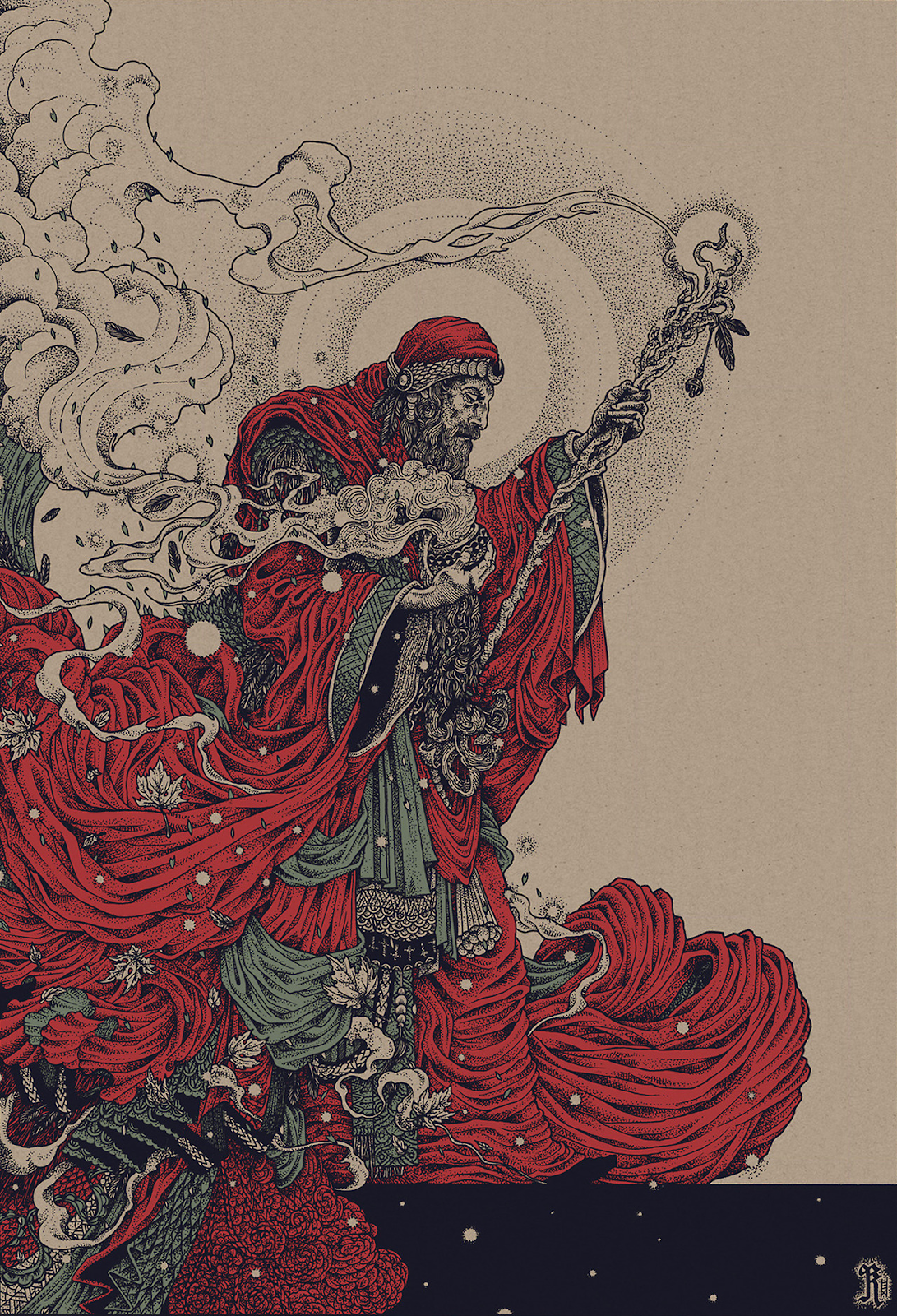
First picture is what I imagine to be an envoy. It was made by Richey Beckett. 


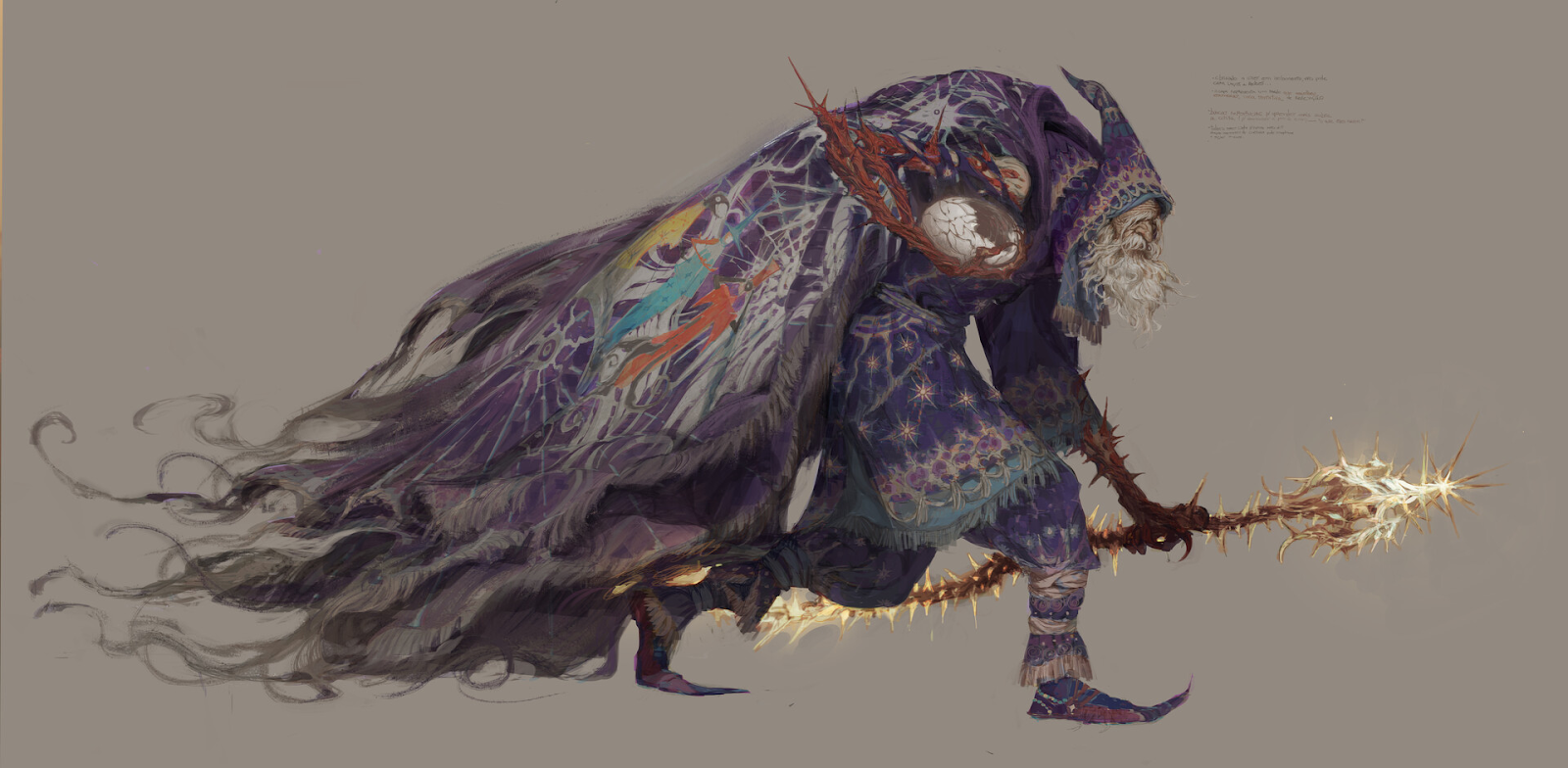
A Lich drawn by Yann Blomquist.


A carrion lord drawn by Joao Bragoto.


(Artist unknown.) This was the token used by a player

who was a soul mage during the first ever game in this setting.


A blessed drawn by Igor Kieryluk.


Sunday, January 26, 2025

A series of biological firearms for those unable or unwilling to make use of gunpowder.

Long have these slumbered, waiting for their time to shine, that time is now I guess. I have a bunch of other guns, but they get their own post.

Reload x means that's how many actions/attacks/movements it takes to reload. Consider a gun squire with a pavise. Most of the reloads include what you need to reload it with.

Acc x: Is your to-hit bonus. It is short for accuracy. 

Unlike bows and slings, firearms without strength scaling do not gain bonus damage or accuracy from stats. Str scaling x2 means you add twice your strength bonus to hit. 

Liveguns: The three below require an hour and x rations to reload. They are not increased in cost when part of hybrid weapons. Each 3 damage shot is rolled to hit individually. 

Pistol: 12m/40ft, acc 2, 2x3 piercing, 1 ration, 1 small slot. 40s

F: Targets within 3m/10ft

Blunderbuss: 24m/80ft, acc3, 4x3 piercing, 2 rations, 2 small slots. 60s

F: Targets within 3m/10ft

Cannon: 60m/200ft, acc 4, 12x3 piercing, anti-material, 6 rations, 1 medium slot. 500s 

F: Targets within 3m/10ft

Canister weapons: Each is loaded by a canister, like flamethrowers, equipped canisters are automatically “loaded” into the weapon when the previous ones run empty. 

Canister: 1 small slot, can be refilled by 10 minutes of hand-pumping, or with 6 seconds at a steam valve connected to a steam engine. 


Steam rifle: 80m/200ft, acc 2, 2 piercing, 2 small slots, 36 shots per canister, 100s. 

F: Small or tiny creatures. 

Pressure rifle: 60m/200ft, acc 2, 2 piercing, 2 small slots, 36 shots per canister 120s. 

Can spend up to 3 additional ap and gas charges on a shot to give +2 damage, +1 acc and +12m range each time.  

F: Small or tiny creatures. 

Grenade launcher: 60m/200ft, acc 2, 4 bludgeoning, reload 1 (a grenade or rock), 2 small slots, 6 shots per canister, 300s. 


Flamethrowers: Do not take actions to reload, instead taking their ammunition from your inventory. Each is 2 small slots, and takes (2ap) to fire. 


Flamethrower: 600s: 2 small slots, 1L of gasoline or oil per shot.   

Jet: 12m/40ft line, 8 burning (DOT fire), reload 2 (1L of gasoline) 

Balefire thrower: Reload 2, (1L of ClF3), 700s.  

Unleash(2ap): 6m/20ft cone, 12 fire. 

Secondary explosion on hitting water/blood: 3m/10ft radius, d12 acid.

Drill launcher: 30m/100ft, 8 piercing, 4 small, str scaling x2, anti-material, reload 1 (1 drill, 5 drills, can fit within a small slot. The drills are reusable), 200s.  

F: Targets behind cover 

Ice rifle: 90m/300ft, acc 4, 6 bludgeoning/cold, Reload 1 (1L of water+1 ration), 400s. 

F: Oozes

Proliferation rifle: 60m, acc2, 8 acid, reload 2 (2 rations), spawns 1hd ooze on kill, 200s. 

F: organic targets 

Spine rifle: 60m/200ft, acc3, 4x2 piercing, impale, reload 2 (a handful of bones), 100s.

F: organic targets

Web launcher: Launches a web 12m/40ft, it connects 4 points/targets within a 3m radius. Reload 3 (3 rations). 400s

Spore launcher: 30m cone, 1 poison, secondary explosion on kill (30m sphere). 

Reload 2 (1 ration). 300s

Hyphae launcher: Launches a hyphae harpoon to a point within 20m (2ap), 4 small slots, 400s.

Holds 4 hyphae harpoons. Regenerates one with 10 minutes and a ration.


Hyphae harpoon: 1hp, tiny. Speed: walk 1, climb 1, burrow 12, swim 20, 1ap. 

Passive ability: When this creature touches another creature (must be able to access unarmored skin, though it can burrow through objects of a similar toughness to hardwood or stone, reaching the soft flesh underneath.) It imbeds itself inside that creature, it will then rapidly grow, dealing 3 damage every round, to a maximum of 9.  

-You may save to avoid this if you are upright, but not if you have your back and stomach facing the ground, or if you are underwater. 

-It can be ripped out with a dc10 strength checks. The harpoon is killed, and the victim of the harpoon takes as much damage as it has already taken again. 

-If the target is a worm, grub, maggot, centipede, nematode or other worm like invertebrate, it does 6 damage per turn it is left in, without a maximum damage value. 


Art by: http://cmkosemen.com/illustration.html 


Monday, January 20, 2025

Class: Blade conductor

 Class: Blade conductor: 

A: Dancing blade.

B: Maestro, Killing frequency.

C: Orchestra of violence.

D: Symphony of destruction. 

Equipment: A 6-foot-long, Rapier-thin longsword, a weathered noble's coat lined with silver thread, 3 bottles of wine, and a violin. You do not start with money, but your coat and blade are worth a lot if you pawn them. 

Skill: Musician and: Historian, duelist, poet.


Dancing Blade: You gain 1 dancing blade point which you can spend to animate swords, which may fly anywhere within 20ft. You may use one point to animate one sword as if it was wielded by two hands, two points to animate three one-handed swords, and you may use one point to animate two daggers. 

Each blade may attack once on your turn. Your hands may not bear any weapons or shields while you use this ability, but they remain free. Attacking with your blades does not use your action. 

You may use any of your mental stats when rolling to hit (not damage) with your dancing blades. In addition, you may imbue 1 blade within arms reach with your strength or dexterity bonus in addition to its existing to-hit bonus (your physical stat is also added to damage) by consuming an action. 


Maestro: You may use your action to give one of your swords advantage on its attack if you have your hands empty or are holding an instrument. This does not consume an action if you use it on a sword you imbued with your physical bonus this turn. You gain the ability to balance perfectly on your dancing blade while it flies. It flies at 60ft/turn but forgoes its attack. This requires a two handed sword.


Killing frequency: Your blades gain +[round number] to hit. On turn 4, you reach crescendo, and it begins decreasing on round 5.  You add the highest to hit bonus among all your dancing blades to your unarmed attack to-hit, grappling rolls, and manoeuvres.


Orchestra of violence: Each blade may forgo its attack on its next turn to, as a reaction, reduce damage dealt by a melee attack by their damage die. +1 blade point.  


Symphony of destruction: When you reach crescendo, you may forgo your action and all your sword attacks to instead deal 1d8 damage to every enemy within 30 feet, and parry every attack they make for 1d8 within that range during that round. Your range increases to 30 feet.

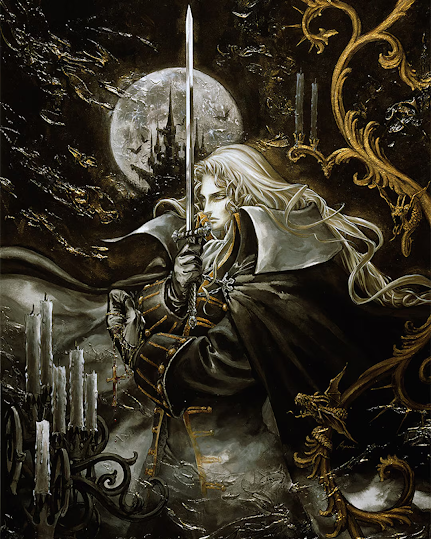
Art from: Symphony of the night. 

https://docs.google.com/document/d/1yYOmMp4pak33H_uBW0V4K8iVekP_Jz3yLJwc19rPMYQ/edit?usp=sharing Doc version.


Saturday, January 18, 2025

Nine rivers of blood - Warrior

A: Warrior, Paths. 

B: Life alchemy, +1MD.

C: Parry.

D: Saint.


Skills: Fortification and 1-Survival, 2-Police work and espionage, 3-Etiquette and academia, 4-Religion and craftsmanship. 


Starting equipment: A Livegun (3d6, hits touch ac, takes an hour, a ration and a handful of scrap metal to reload), a melee weapon of your choice, a suit of armour, three cans of fish, and a bag of caltrops. 


Warrior

-You gain an additional action.

-You have [level]+1 times the agility and strength of a commoner.

-Add +[templates] to hit rolls, grapples, manoeuvres, stunts and physical ability checks.  


Paths 

-You may use any path from the list here, using those rules.

-You start with 2 paths and 1 technique or stance from each at level 1. And you gain a new technique whenever you level up. You also gain a technique whenever you defeat a legendary or significantly superior foe.

-You may learn a path by learning it from a suitable master for a month, from wielding a magic weapon with a connection to the path, or by performing haruspicy on a great beast. If you level up and have completed all your paths, then your dm is either being too lax with what a superior foe is or is not giving you enough paths.


Life alchemy

-If you have unlocked a soul etching, retroactively replace all your previous HD rolls with 5s. More information on soul etchings can be found within this link mentioned above. 

-You may use an MD at any time to heal yourself by [sum], at the cost of one exhaustion.


Parry

-1/round, when someone within reach of a melee weapon you are wielding is hit by a melee attack, you may reduce the damage by d20+[level]. If you reduce the damage to 0, you may attack back as a reaction, using the parry result as your hit roll. 


Saint

For each completed path, you:

-Learn a new, thematically linked skill or language. 

-Invent a new technique. Dm approval of the skills and techniques is required.

-Gain another +1 to hit rolls, grapples, manoeuvres, stunts and physical ability checks.  

-At each odd level after 4, gain +1MD.

Note: This class is also intended to be used with the original duelist techniques linked at the bottom of the post here.


By: Ariel Perez